
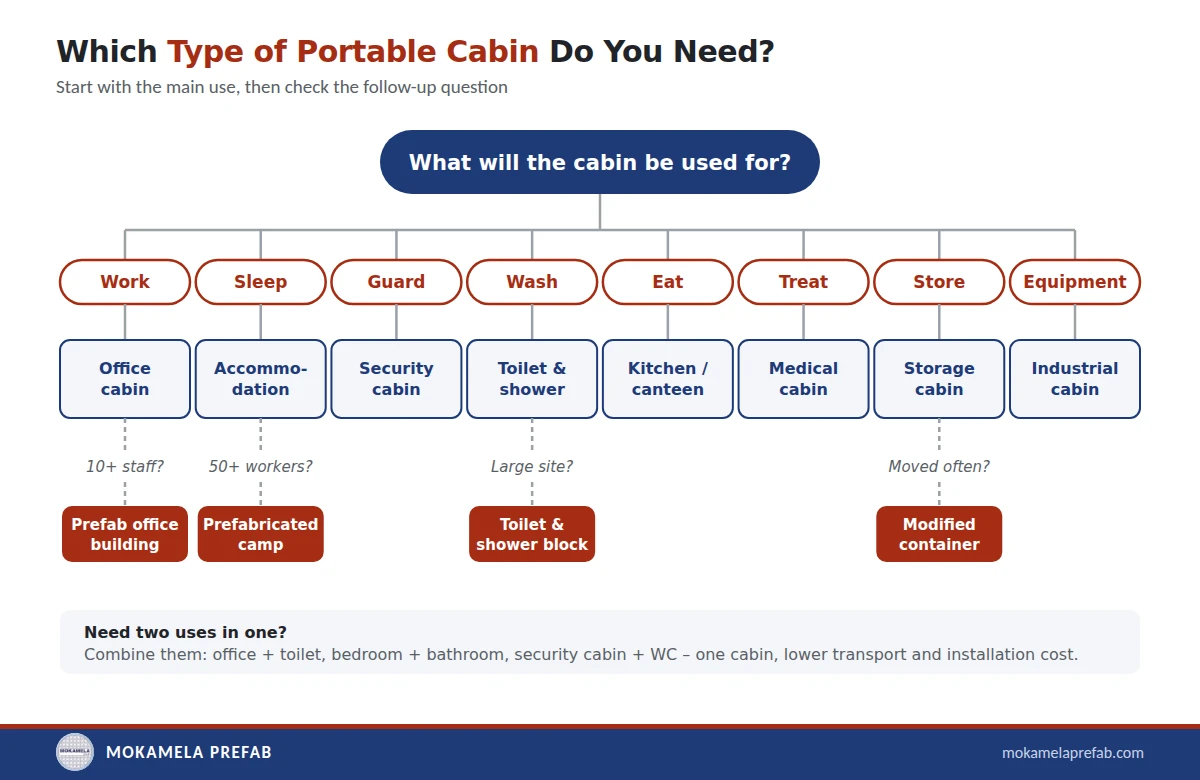
If you’re planning a site in Saudi Arabia, you’ll soon need cabins. But which kind? The term “porta cabin” covers everything from a small guard booth to a fully fitted clinic, and choosing the wrong type wastes money and time. This guide explains the main types of portable cabins, what each is used for, and how to pick the right one for your project.
Quick Answer: What Are the Main Types of Portable Cabins?
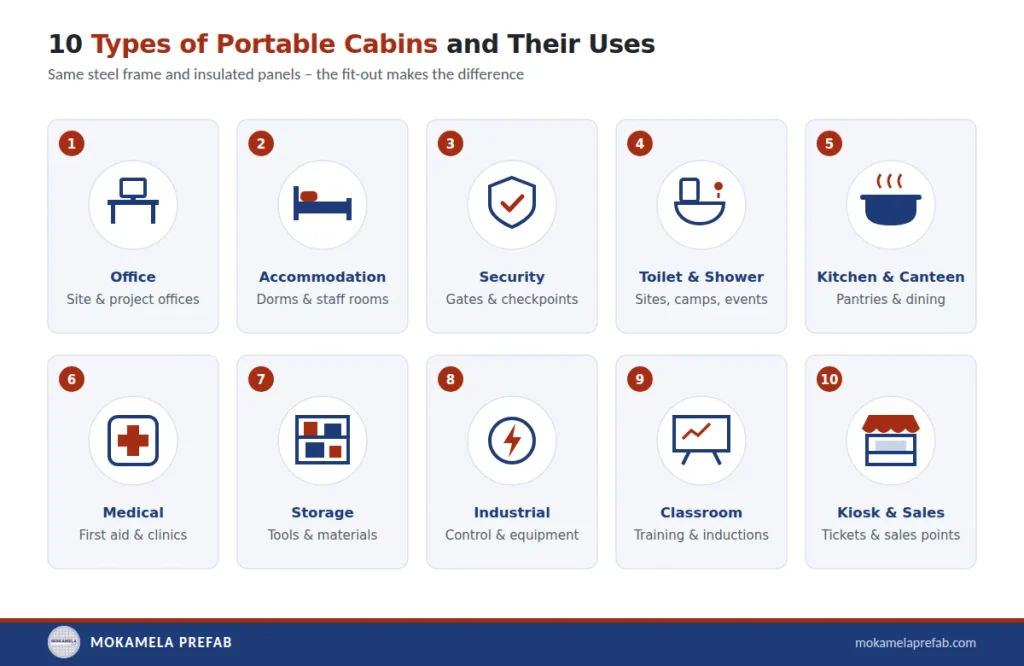
The most common types of portable cabins in Saudi Arabia are:
- Office cabins: site and project offices
- Accommodation cabins: sleeping rooms and dormitories
- Security cabins: guard booths and gatehouses
- Toilet & shower cabins: sanitation units
- Kitchen & canteen cabins: food preparation and dining
- Medical cabins: first-aid rooms and site clinics
- Storage cabins: tools, materials and equipment
- Industrial cabins: control rooms, equipment and electrical rooms
- Classroom & training cabins: temporary learning spaces
- Kiosk & sales cabins: ticket offices, sales points and event units
All of them share the same basic structure: a steel frame with insulated wall and roof panels. The difference is the fit-out, meaning what goes inside.
Porta Cabin Types at a Glance
| Cabin type | Typical size | Key features | Best for |
|---|---|---|---|
| Office | 20-40 ft | AC, desks, data points | Site teams, project management |
| Accommodation | 20-40 ft | Beds, wardrobes, optional bathroom | Workers, engineers, supervisors |
| Security | 10 ft or smaller | Wide glazing, compact | Gates, checkpoints |
| Toilet & shower | 10-40 ft | WCs, showers, drainage | Sites, camps, events |
| Kitchen / canteen | 20-40 ft | Sinks, counters, ventilation | Site catering, rest areas |
| Medical | 20 ft | Easy-clean walls, sink | First aid, site clinics |
| Storage | 20-40 ft | Lockable, shelving | Tools, materials, spares |
| Industrial | 10-40 ft | Heavy electrical, cooling | Control and equipment rooms |
| Classroom | 40 ft or joined | Open space, lighting | Training, temporary schools |
| Kiosk / sales | 10-20 ft | Counter window, signage | Events, ticketing, sales points |
Sizes are typical. For exact dimensions, see our guide to portable cabin sizes.
1. Office Cabins
Office cabins are the most common type on Saudi construction sites. They give site managers, engineers and project teams a cool, quiet place to work.
Typical features:
- split AC sized for Saudi summers
- desks, chairs and filing storage
- LED lighting, sockets and data points
- optional meeting area, pantry or toilet
Common uses:
- site engineer’s office
- project management office
- consultant and client meeting room
For layouts and multi-room options, explore our porta cabin offices.
2. Accommodation Cabins
Accommodation cabins provide safe, insulated sleeping space near the site. They range from shared dormitories to single rooms with private bathrooms.
Typical features:
- single or bunk beds
- wardrobes and storage
- AC and fire-rated insulation
- optional attached bathroom
Common uses:
- worker dormitories
- engineer and supervisor rooms
- temporary staff housing
Worker housing in the Kingdom must meet the conditions of the national collective housing program. The WHO Housing and health guidelines also flag crowding as a health risk. Therefore, plan space per person carefully.
Housing a large workforce? Individual cabins become inefficient at scale. In that case, prefabricated camps are usually the better option.
3. Security Cabins
Security cabins are compact units for gate control and site monitoring. They’re small, but they’re often the first thing visitors see.
Typical features:
- glazing on three or four sides for clear views
- a small desk and chair
- AC (essential for long shifts in the heat)
- optional barrier controls and lighting
Common uses:
- site entrance gatehouses
- checkpoints and parking control
- perimeter guard posts
4. Toilet & Shower Cabins
Sanitation is essential wherever there’s no permanent plumbing. Toilet and shower cabins come in many configurations, from a single WC to large multi-cubicle blocks.
Typical features:
- WCs, urinals and wash basins
- shower cubicles
- non-slip, waterproof flooring
- connection to septic tanks, holding tanks or mains drainage
Common uses:
- construction sites
- worker camps
- outdoor events
For FRP units, VIP washrooms and full toilet blocks, see our portable toilets and washrooms.
5. Kitchen & Canteen Cabins
Kitchen and canteen cabins let teams prepare food and eat on site. They need careful planning for ventilation, drainage and hygiene.
Typical features:
- stainless-steel counters and sinks
- extraction and ventilation
- easy-clean wall and floor finishes
- dining tables and seating
Common uses:
- site pantries and tea rooms
- small canteens
- rest and break areas
6. Medical & First-Aid Cabins
Medical cabins bring basic healthcare to the site. Remote projects, in particular, often need a clinic within easy reach.
Typical features:
- hygienic, easy-clean wall surfaces
- a sink with water supply
- a treatment couch and storage
- filtered AC
Common uses:
- first-aid rooms
- site clinics
- occupational health and screening rooms
7. Storage Cabins
Storage cabins keep tools, materials and spare parts secure and dry. Dust and heat can damage equipment quickly, so a sealed unit pays for itself.
Typical features:
- heavy-duty lockable doors
- shelving and racks
- optional ventilation or AC for sensitive items
Common uses:
- tool and equipment stores
- material and spare parts stores
- document archives
Need extra-tough storage? If the unit will be moved often or must resist forced entry, modified containers are often a better fit.
8. Industrial Portable Cabins
An industrial portable cabin is built for technical and operational use rather than people’s comfort alone. These units often sit inside plants, refineries and utility sites.
Typical features:
- heavy-duty electrical systems and distribution boards
- strong cooling for equipment
- cable entry points and raised floors (optional)
- fire-rated materials where required
Common uses:
- control rooms
- electrical and switchgear rooms
- server, telecom and equipment rooms
- operator shelters
On oil, gas and petrochemical sites, industrial cabins must often meet client specifications. For example, suppliers to Aramco must be registered through Aramco’s supplier registration process.
9. Classroom & Training Cabins
Classroom cabins provide open, well-lit space for learning. They’re popular for site inductions, safety training and temporary school expansions.
Typical features:
- open-plan layout
- good lighting and AC
- whiteboards and seating
- multiple windows for natural light
Common uses:
- HSE inductions and training
- temporary classrooms
- community and meeting rooms
10. Kiosk & Sales Cabins
Small, eye-catching units for serving customers or visitors.
Typical features:
- service counter window
- branding and signage options
- compact footprint
Common uses:
- ticket offices at events
- real estate sales offices
- information and parking kiosks
How Portable Cabins Are Built: 3 Construction Types
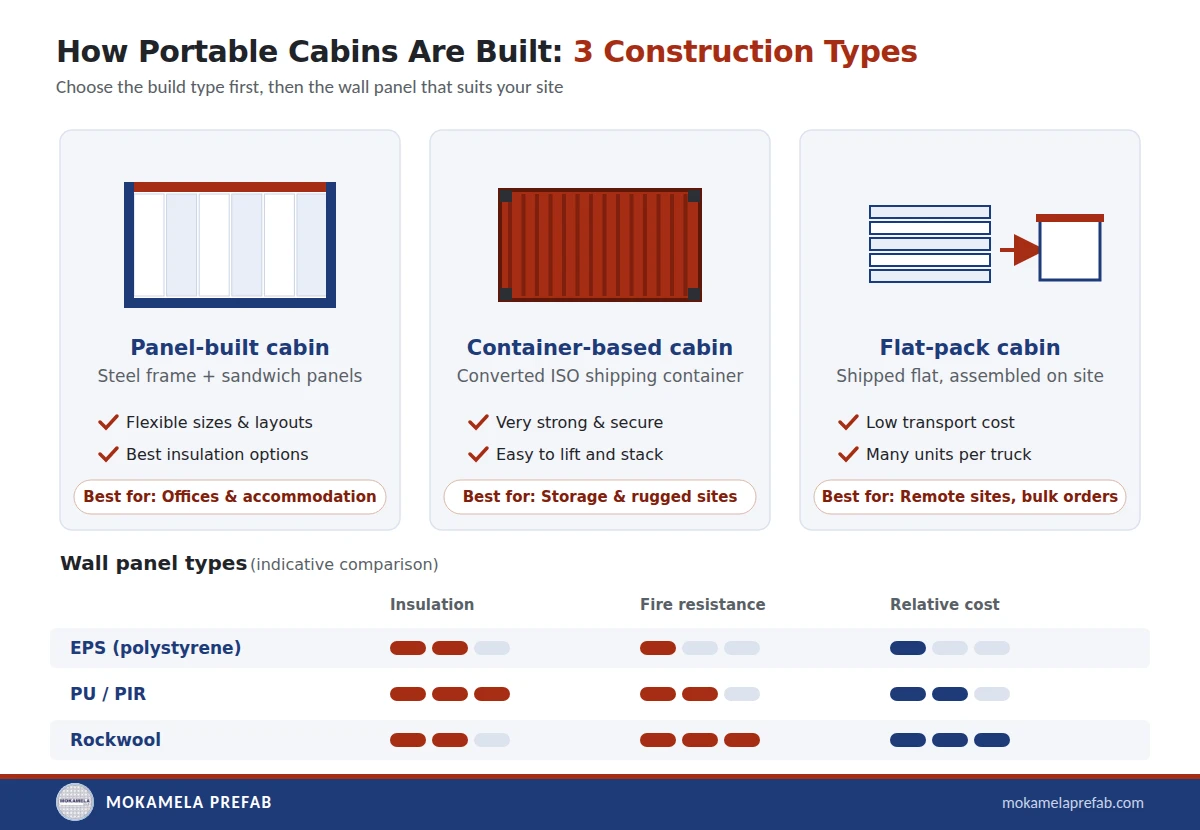
Beyond use, cabins also differ in how they’re built.
| Construction type | How it’s made | Pros | Best for |
|---|---|---|---|
| Panel-built cabin | Steel frame + insulated sandwich panels | Flexible sizes, good insulation | Most offices and accommodation |
| Container-based cabin | Converted steel shipping container | Very strong and secure | Storage, rugged sites |
| Flat-pack cabin | Shipped flat, assembled on site | Cheap to transport | Remote sites, large quantities |
Container-based units follow international container dimensions set by ISO 668, which makes them easy to transport and stack.
Panel Types Inside the Walls
The wall panel affects comfort, safety and cost:
- EPS (polystyrene): lowest cost, lower fire resistance
- PU/PIR: better insulation, the most common choice
- Rockwool: fire-rated, often required for accommodation and industrial sites
Panel choice matters a lot in Saudi Arabia’s summer climate, where temperatures regularly reach the high 40s °C.
How to Choose the Right Type of Portable Cabin
Follow these steps:
- Define the main use. Office, sleeping, sanitation, storage or technical?
- Count the users. How many people will use it at the same time?
- List the services needed. AC, plumbing, data, heavy electrical?
- Check client and site rules. Does your client require fire-rated panels or specific standards?
- Plan for the future. Will the cabin be moved, reused or extended?
- Choose the size. Match the layout to the space (see our sizes guide).
- Set the budget. Fit-out has a big effect on price. See our porta cabin price guide.
Combination Cabins
You don’t always need separate units. Many projects combine uses in one cabin, for example:
- office + toilet
- accommodation + bathroom
- office + pantry + meeting room
- security cabin + toilet
This saves space, transport and installation costs.
Standards and Approvals to Consider
Whatever type you choose, check these requirements:
- Structure and electrics: the Saudi Building Code sets requirements for buildings in the Kingdom.
- Fire safety: occupied cabins, especially accommodation, must meet Civil Defense requirements.
- Product quality: materials and fittings should meet relevant SASO standards.
- Worker housing: accommodation must follow the collective housing program’s licensing conditions.
- Client specifications: major clients such as Aramco and NEOM have their own vendor and material requirements.
Common Mistakes When Choosing a Cabin Type
- Using office cabins as accommodation: they often lack fire-rated insulation and proper ventilation for sleeping.
- Ignoring plumbing early: adding a toilet later is costly and messy.
- Undersizing AC: a cabin that’s comfortable in March may be unbearable in August.
- Forgetting security cabins need comfort too: guards work long shifts in extreme heat.
- Choosing panels on price alone: cheap EPS panels may be rejected on industrial or client sites.
Find the Right Portable Cabin for Your Project
Mokamela Prefab builds every type of cabin in this guide, from single guard booths to fully fitted clinics and control rooms. We’re an approved vendor to Aramco, NEOM, SEC and SWCC, and we can customise any cabin to your layout.
Browse our range of portable cabins, or tell us what you need. We’ll recommend the right type and send a quote within 2 hours.
📞 +966 54 540 3028 · 📩 sales@mokamela.com · Request a quote
Frequently Asked Questions
What is the most common type of portable cabin?
Office cabins are the most common on Saudi construction sites, followed by accommodation and toilet cabins.
What is an industrial portable cabin?
It’s a cabin designed for technical use, such as a control room, electrical room or equipment shelter. It usually has heavy-duty electrics and strong cooling.
Can one cabin have more than one use?
Yes. Combination cabins, such as office + toilet or bedroom + bathroom, are very common and save space and cost.
Which cabin type is best for worker accommodation?
Accommodation cabins with fire-rated insulation and proper ventilation. For large workforces, a prefabricated camp is usually more efficient.
Are container cabins better than panel cabins?
Not always. Container cabins are stronger and more secure, so they’re great for storage. Panel cabins offer better insulation and more flexible sizes for offices and accommodation.
Leave a Reply